



Traveling internationally is exciting — but nothing is more frustrating than arriving at your destination and realizing your electronics won’t plug into the wall. Different regions use different plug types, socket shapes, and voltage levels. Whether you’re visiting Europe, exploring Asia, or traveling across Africa, understanding which power adapter or voltage converter you need is essential.
At Overseas220Volts.com, we specialize in providing reliable adapters, converters, and transformers that make your international travel hassle-free. In this comprehensive guide, we’ll explain the plug types, voltage differences, and best adapters for Europe, Asia, and Africa — helping you power your devices safely and efficiently.
1. Understanding Plug Types and Voltage Basics
Before diving into regions, it’s important to understand a few fundamentals:
– Plug Type: The shape and design of the plug’s pins. There are over 15 plug types worldwide, labeled Type A through Type N.
– Voltage: The electrical potential difference. In most of the world, voltage ranges between 220V–240V, while countries like the U.S. and Canada use 110V–120V.
– Frequency: Usually 50Hz or 60Hz. While minor differences are often safe for most electronics, it matters for appliances like clocks or hair dryers.
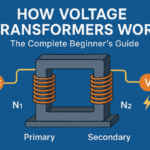
If your device is labeled “Input: 100–240V”, it’s dual voltage and can be used globally with the correct plug adapter. If not, you’ll need a voltage converter or transformer.
2. Power Adapters and Voltages in Europe
Most European countries (France, Germany, Italy, Spain, etc.) use Type C or Type F plugs. These have two round pins and operate on 220–240V at 50Hz.
Exceptions:
– The UK, Ireland, Malta, and Cyprus use Type G plugs.
– Switzerland uses Type J plugs.
– Denmark uses Type K.
If you’re traveling from the U.S., Canada, Japan, or anywhere using 110V and Type A/B plugs, you’ll need:
– A Type C/F adapter for most of Europe.
– A Type G adapter for the UK and Ireland.
For non-dual voltage devices, use a Step-Down Voltage Converter (220V → 110V) available on Overseas220Volts.com.
3. Power Adapters and Voltages in Asia
Asia’s plug types vary significantly between regions:
– Type A & B: Found in Japan, China, and parts of Southeast Asia.
– Type C: Common in Indonesia, Thailand, and much of the Middle East.
– Type G: Used in Singapore, Malaysia, Hong Kong, and the UAE.
Voltage typically ranges from 220V–240V, except in Japan (100V) and Taiwan (110V).
If visiting multiple countries, invest in a universal adapter with built-in surge protection — it’s the safest option for laptops, phones, and cameras. For devices like hair dryers or electric razors, check their wattage. If they’re not dual voltage, use a step-down converter to avoid damage.
4. Power Adapters and Voltages in Africa
Africa uses a mix of plug types depending on the region:
– Type C: Common across Northern Africa and parts of Southern Africa.
– Type D: Found in countries like India, South Africa, and Namibia.
– Type G: Used in Nigeria, Kenya, and Ghana.
Voltage is generally 220–240V at 50Hz.
Most travelers will need a Type C/D/G adapter depending on the destination. For travelers from 110V regions (like the U.S.), a voltage converter is recommended for high-power electronics.
5. Universal Travel Adapter: The One-for-All Solution
If your travel plans include multiple continents, the smartest choice is a universal adapter. These models feature retractable plug types that cover Europe, Asia, Africa, and beyond.
Look for these features:
– Built-in fuse protection
– Dual USB or USB-C charging ports
– Compact design for carry-on travel
– Rated for 220V–240V
Pro Tip: A universal adapter doesn’t convert voltage. If your device isn’t dual voltage, pair it with a voltage converter from Overseas220Volts.com.
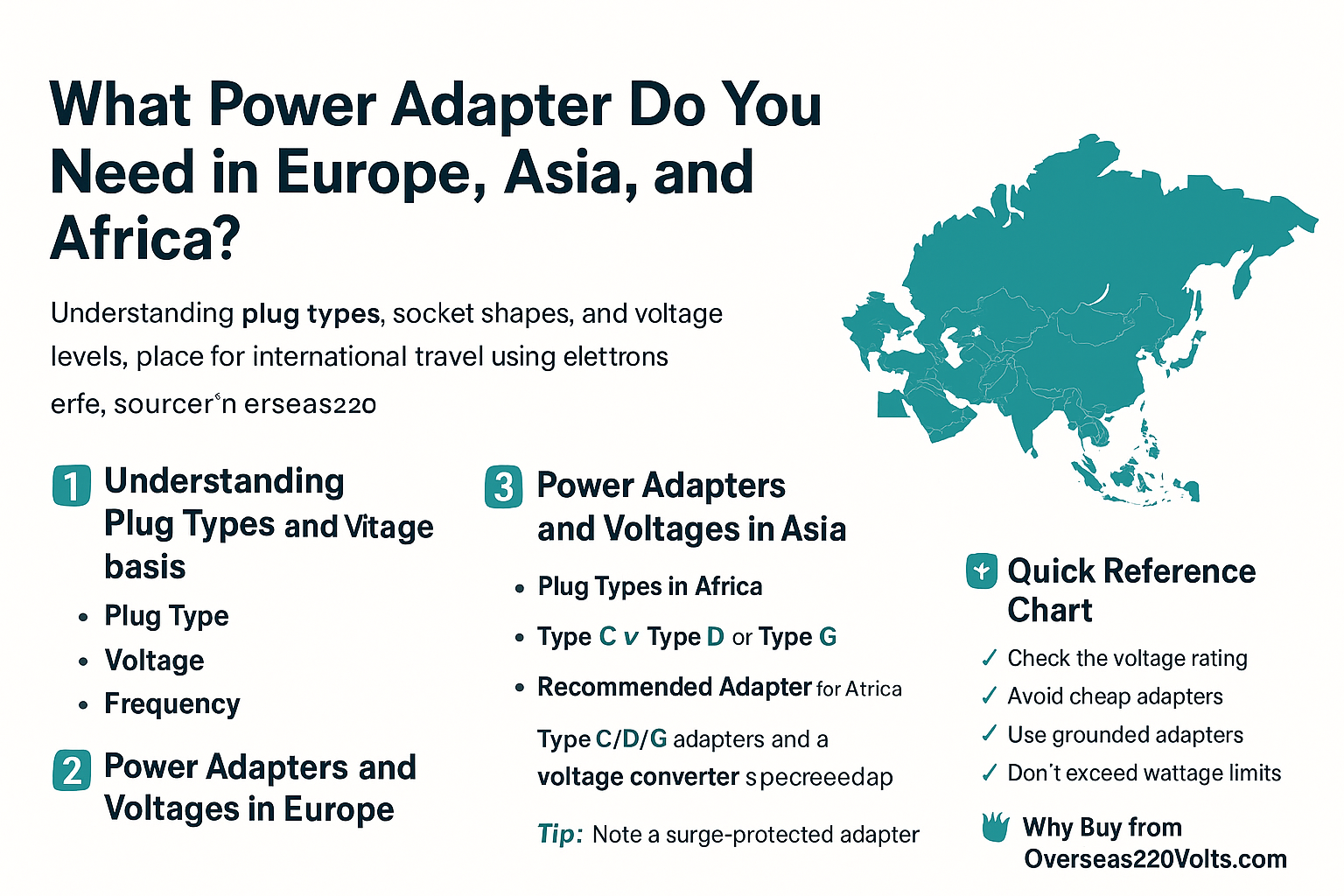
6. Quick Reference Chart
| Region | Common Plug Types | Voltage | Frequency | Adapter Needed |
| Europe | C, F, G, J, K | 220–240V | 50Hz | Type C/F/G Adapter |
| Asia | A, C, G | 100–240V | 50/60Hz | Type A/C/G Adapter |
| Africa | C, D, G | 220–240V | 50Hz | Type C/D/G Adapter |
7. Safety Tips for Using Adapters and Converters
– Always check the voltage rating on your device before plugging in.
– Avoid cheap adapters — poor-quality materials can overheat and damage sockets.
– Use grounded adapters (three-pin) for devices like laptops or cameras.
– Don’t exceed wattage limits — converters have maximum load ratings (usually 200–250W for travel models).
– Pack a spare adapter — hotels sometimes have limited outlets or incompatible sockets.
8. Why Buy from Overseas220Volts.com
At Overseas220Volts.com, we offer:
– A wide selection of certified voltage converters, transformers, and plug adapters
– Products tested for international safety standards (CE, UL)
– Expert customer support to help you find the right adapter for your destination
– Competitive prices and worldwide shipping
Our goal is simple: to keep your devices powered and protected wherever you travel.
Conclusion
From the cobblestone streets of Europe to the bustling cities of Asia and the vibrant landscapes of Africa, power outlets vary — but your travel experience doesn’t have to be complicated.
With the right power adapter or voltage converter, you can charge your phone, laptop, and camera safely anywhere in the world.
Explore the full range of travel adapters and converters today at Overseas220Volts.com — and travel with confidence knowing your electronics are always ready to go.