


When you’re setting up electronics at home or at work, a common question often comes up: Should you use a power strip or an extension cord?
At first glance, they may seem similar. Both help deliver electricity to devices when a wall outlet isn’t conveniently located. However, they’re designed for different purposes, and using the wrong one could lead to safety risks or inefficient setups.
Understanding the difference between these two tools can help you choose the right solution, avoid electrical hazards, and protect your devices. In this guide, we’ll break down how power strips and extension cords work, when to use each one, and how related accessories—like electric extension leads, power leads, AC plugs, custom power cables, and generator cords—fit into the bigger picture.
What Is a Power Strip?
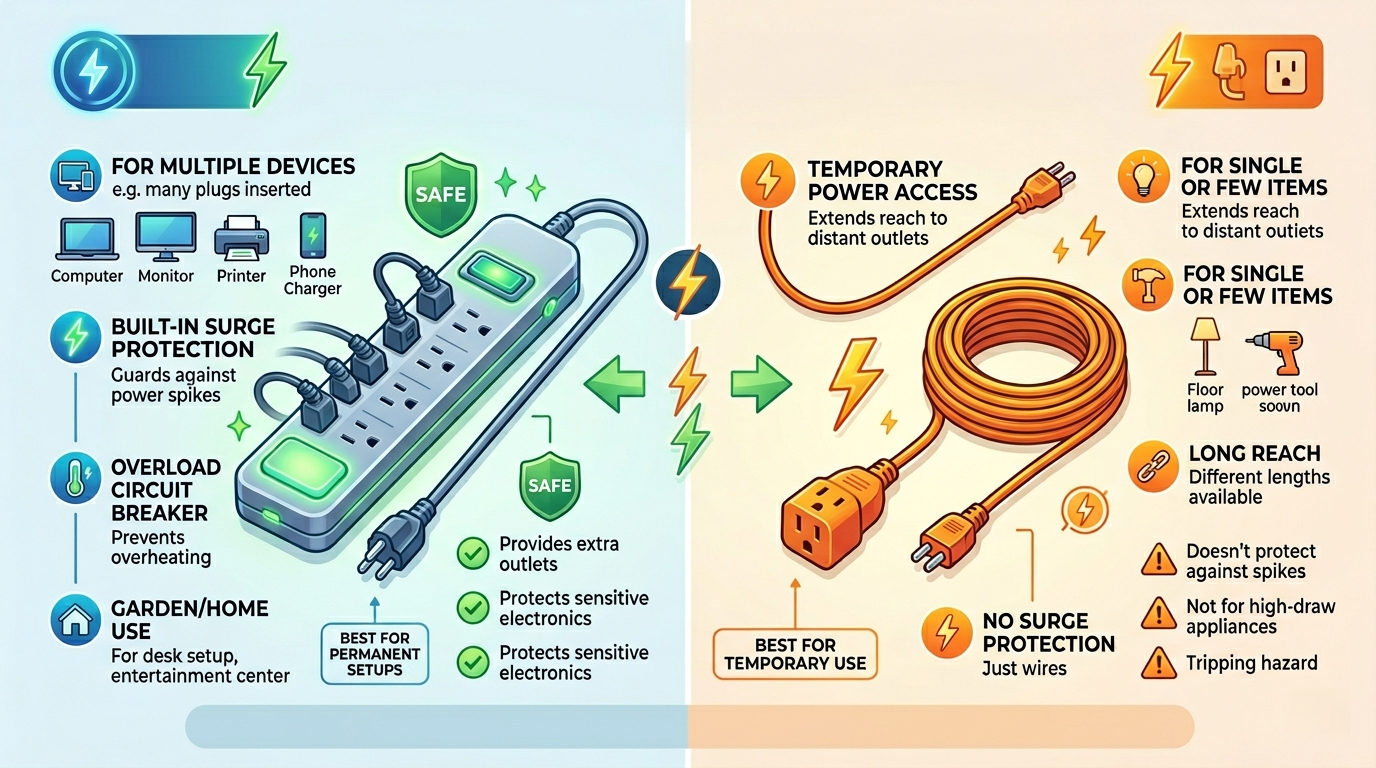
A power strip is a device that lets you plug multiple electronic devices into a single wall outlet. It typically has several sockets arranged in a strip with one main AC plug that connects to the wall.
Many modern power strips include extra features that improve safety and convenience, such as:
- Surge protection
- Overload protection
- Individual on/off switches
- USB charging ports
Because of these features, power strips are commonly used with electronics and office equipment.
For example, if you’re working at a desk and need to power a Dell laptop charger 65W, monitor, printer, and desk lamp, a power strip allows you to run everything from one outlet in an organized and safe way.
What Is an Extension Cord?
An extension cord is a flexible electrical cable designed to extend the reach of a power outlet. It usually has a single socket on one end and an AC plug on the other.
Extension cords are commonly used when:
- The power outlet is too far from the device
- Temporary power is required
- Outdoor equipment needs electricity
In many electrical supply markets, extension cords are also referred to as electric extension leads.
Unlike power strips, most extension cords do not include multiple outlets or built-in surge protection, as their primary purpose is simply to extend power from one place to another.
Key Differences Between Power Strips and Extension Cords
Knowing the main differences can help you decide which option works best for your situation.
1. Number of Devices
Power strips are designed to power multiple devices at the same time.
Extension cords typically power one device at the end of the cable.
So if you need to connect several electronics—like a laptop, speakers, and a charger—a power strip is usually the better choice.
2. Distance vs Distribution
Another key difference is their main function.
- Extension cords extend the distance between the device and the power outlet.
- Power strips distribute electricity to multiple devices from one outlet.
For example:
- Use electric extension leads when your equipment is located far from a wall socket.
- Use a power strip when several devices need to share a single outlet.
3. Safety Features
Many modern power strips include built-in safety features such as:
- Surge protection
- Overload protection
- Circuit breakers
Extension cords usually don’t include these protections unless they are specialized models.
If you’re powering sensitive electronics—like a Dell laptop charger 65W—using a surge-protected power strip is often the safer option.
When Should You Use a Power Strip?
Power strips are ideal when multiple low-power electronic devices need to run at the same time.
Home Office Setup
A typical home office might include several devices:
- Laptop charger
- Monitor power leads
- Router power supply
- Phone charger
- Desk lamp
Instead of plugging each device directly into the wall, a power strip keeps everything organized and powered from a single outlet.
Entertainment Systems
Entertainment setups often require several power connections, including:
- Television
- Sound system
- Gaming console
- Streaming devices
Using a surge-protected power strip helps protect these devices from sudden voltage spikes.
Charging Stations
Power strips are also great for charging multiple devices at once, such as smartphones, tablets, wireless earbuds, and laptops.
When Should You Use an Extension Cord?
Extension cords are better suited for situations where distance is the main issue.
Outdoor Work
When using tools outside or in a garage, extension cords provide the flexibility needed to reach distant power outlets.
Heavy-duty electric extension leads are often used for:
- Power tools
- Outdoor lighting
- Workshop equipment
Temporary Power Setups
Extension cords are ideal for short-term setups, such as:
- Event lighting
- Holiday decorations
- Construction sites
However, they should never be used as permanent wiring.
Generator Connections
During power outages, specialized cables like a 30A generator cord are used to connect generators to electrical equipment.
These heavy-duty cords are built to handle higher electrical loads safely.
The Role of Power Cables and Connectors
Beyond basic power strips and extension cords, many electrical setups require specialized cables and connectors.
Custom Power Cables
Businesses and equipment manufacturers often use custom power cables designed for specific voltage, current, or connector requirements.
These cables are commonly used in:
- Industrial machinery
- Server equipment
- Specialized electronics
Custom Power Supply Cables
Some devices require custom power supply cables designed to meet unique configurations.
For example, these cables may include:
- Custom connectors
- Specific cable lengths
- Unique voltage ratings
These custom solutions ensure reliable performance and compatibility.
Power Leads
Power leads are the cables that deliver electricity from a power source to a device.
They are commonly used with:
- Desktop computers
- Monitors
- Kitchen appliances
- Office equipment
Choosing the correct power leads helps ensure safe and efficient operation.
Understanding AC Plugs
An AC plug is the connector that plugs into a wall outlet and supplies alternating current to a device.
There are many different types of AC plugs depending on the country and application, including:
- Standard household plugs
- Industrial connectors
- Generator connectors
Using the correct AC plug ensures compatibility with local electrical systems.
Special Case: Male to Male Power Cord
A male-to-male power cord has connectors on both ends that plug into power sources.
These cables are not recommended for normal home use, as they can pose serious electrical hazards if handled incorrectly.
They should only be used in specific professional environments with proper safety precautions.
Safety Tips for Using Power Strips and Extension Cords
No matter which option you choose, safety should always come first.
Avoid Overloading
Every power strip and cable has a maximum power rating. Plugging too many devices into one outlet can cause overheating and increase fire risk.
Use Heavy-Duty Cables for High Power
Large appliances and generators require heavy-duty cables, such as a 30A generator cord or high-capacity extension leads.
Avoid Daisy Chaining
Never connect multiple power strips or extension cords together. This practice—called daisy chaining—can create serious fire hazards.
Choose High-Quality Cables
Low-quality cables may overheat or fail. Always choose durable, certified power leads or custom power cables from trusted manufacturers.
Inspect Cords Regularly
Check cables periodically for signs of damage, such as:
- Frayed insulation
- Loose connectors
- Burn marks
If you notice any of these issues, replace the cable immediately.
Which Option Is Right for You?
The best choice depends on how you plan to use it.
Use a power strip when:
- You need multiple outlets
- You’re powering electronics
- You want surge protection
Use an extension cord or electric extension lead when:
- The device is far from the outlet
- You need temporary power
- You’re powering outdoor equipment
For specialized applications, you may need custom power supply cables, heavy-duty generator cords, or specific power leads.
Final Thoughts
Power strips and extension cords are both essential tools in modern electrical setups. While they may look similar, they serve very different purposes.
Power strips help connect multiple devices safely, while extension cords help bring power to places where outlets aren’t easily accessible.
By understanding when to use each—and by choosing high-quality accessories like custom power cables, reliable power leads, proper AC plugs, and heavy-duty generator cords—you can create a safe, efficient electrical setup for your home, office, or workspace.
Always prioritize safety, use the right cable for the job, and avoid overloading your power connections.